
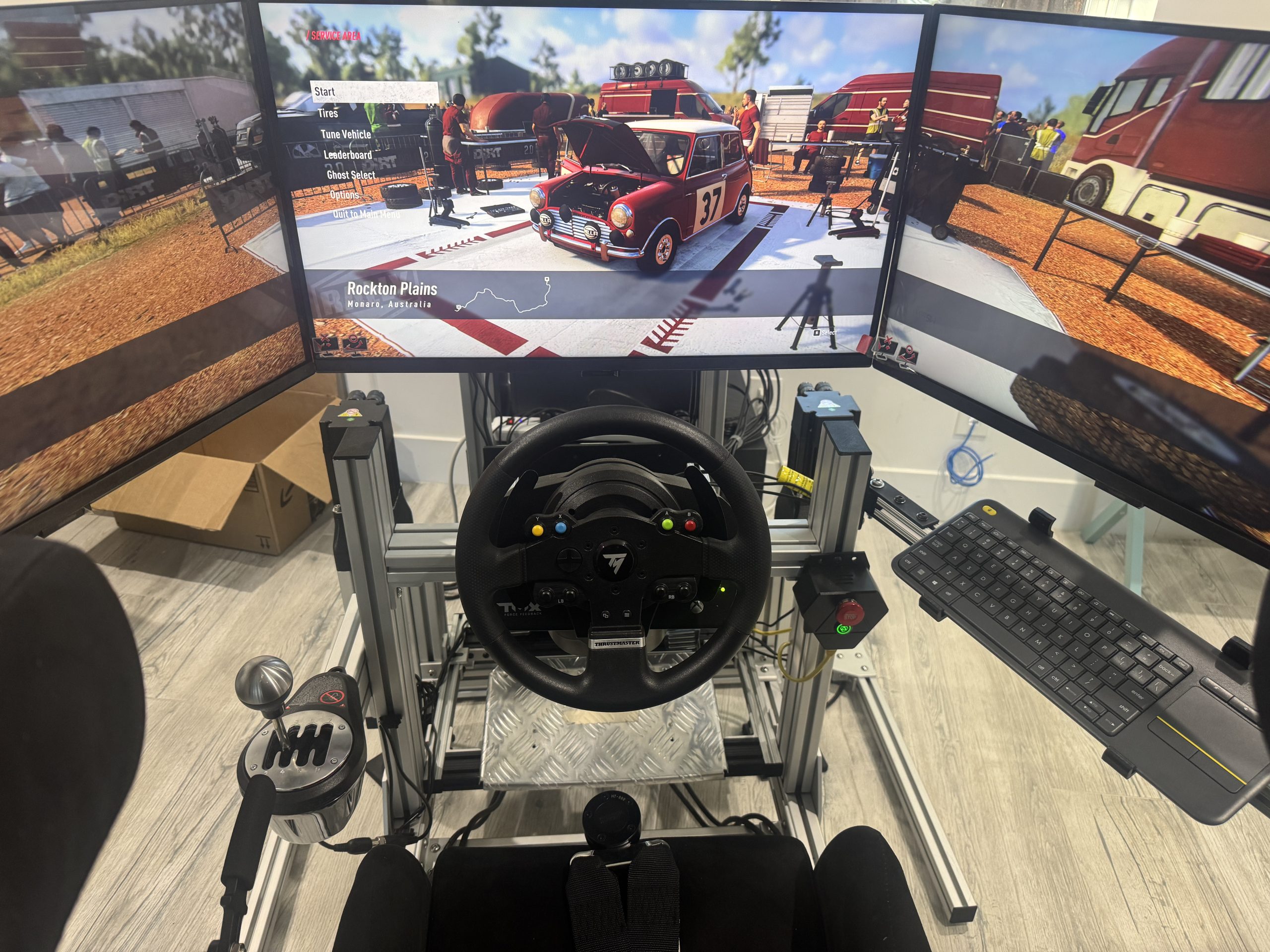
Rallying has always been one of motorsport’s most demanding disciplines — unpredictable surfaces, blind corners, ever‑changing grip levels, and the constant reliance on trust between driver and co‑driver. Traditionally, mastering these challenges required vast amounts of real‑world testing, significant budgets, and a tolerance for risk. Today, that reality is changing rapidly. Rally simulators are revolutionizing motorsport, reshaping how drivers train, teams prepare, and rally schools develop talent.
This shift matters because it makes high‑quality rally training more accessible, safer, and dramatically more efficient. By blending advanced simulation technology with rally‑specific training tools, modern rally simulators offer something once thought impossible: repeatable, realistic rally practice without the cost, risk, or logistical constraints of real stages. In this article, we explore how rally simulators are transforming the sport — and why they are becoming an essential tool for the next generation of rally competitors.
Back in the 1970’s and 1980’s you could get away with practicing on the puclic roads, less traffic and plenty of empty country roads but today what was once possible is now unavailable to new drivers. Speed cameras, high insurance and crowded roads prevents any kind of spirited driving.
For years, simulator technology was dominated by circuit racing. Formula, GT, and endurance racing benefited early from highly accurate virtual tracks and physics models. Rallying, however, lagged behind. The complexity of loose surfaces, elevation changes, and pace‑note‑driven driving made rally simulation far more difficult to replicate.
Recent advances in physics engines, motion systems, and stage design have closed that gap. Modern rally simulators now model gravel, tarmac, snow, and mixed‑surface behavior with impressive fidelity. Weight transfer, braking on loose surfaces, and throttle modulation can be trained repeatedly — something that was previously only achievable through costly real‑world testing.
Training Without Limits
One of the most significant impacts of rally simulators is the removal of traditional training barriers. Weather, daylight, venue availability, and mechanical wear no longer dictate when or how a driver can practice.
With a rally simulator, drivers can:
- Run the same stage repeatedly to refine technique
- Practice high‑risk scenarios safely
- Train year‑round, regardless of conditions
- Focus on specific weaknesses without external pressure
This ability to repeat and isolate skills accelerates learning in a way real‑world rallying rarely allows.
Elevating the Driver–Co‑Driver Relationship
Rally is unique in motorsport because success depends on two people operating as one. Pace‑note accuracy, timing, and communication rhythm are just as critical as car control.
Modern rally simulators increasingly integrate co‑driver training features, including:
- Second sim rig seats with navigator specific equipment
- Real‑time pace‑note calling
- Adjustable call timing and delivery
- Intercom and helmet‑based communication practice
- Scenario‑driven drills to improve trust and consistency
This allows crews to develop chemistry, timing, and confidence long before arriving at an event — something real‑world testing rarely prioritizes due to cost and time constraints.
Safer, Smarter Skill Development
Real rally testing carries inherent risk. Even controlled tests can result in accidents, mechanical failures, or injuries. Simulators provide a safe environment to push limits, make mistakes, and learn from them.
Drivers can experiment with:
- Oversteer and Understeer
- Left foot breaking
- Braking points and entry speeds
- Car setup changes
- Aggressive lines or conservative strategies
All without the consequences of damaging a car or jeopardizing safety. This encourages experimentation and deeper understanding — key ingredients in driver development.
Making Rally More Accessible
Historically, rallying has been one of the most expensive forms of grassroots motorsport. Rally simulators are helping to lower that barrier to entry.
Aspiring drivers can now:
- Learn fundamentals before ever entering a real car
- Build confidence and skill progression affordably
- Gain exposure to rally techniques earlier in their careers
For clubs and schools, simulators provide a scalable way to nurture talent and grow participation in the sport.
The Future of Rally Training
As simulation technology continues to evolve, its role in rallying will only expand. We are moving toward a future where simulator training is not a supplement, but a foundational part of rally preparation — from grassroots competitors to professional teams.
Rally simulators are not replacing real driving; they are enhancing it. By reducing cost, increasing safety, and enabling smarter training, they are redefining how rally drivers and co‑drivers prepare for competition.
Conclusion
Rally simulators are revolutionizing motorsport by transforming how skills are developed, teams are prepared, and talent is discovered. What was once limited to elite budgets and risky testing is now accessible, repeatable, and data‑driven.
For drivers, co‑drivers, rally schools, and teams alike, the message is clear: the future of rally training is virtual — and it’s already here.

