
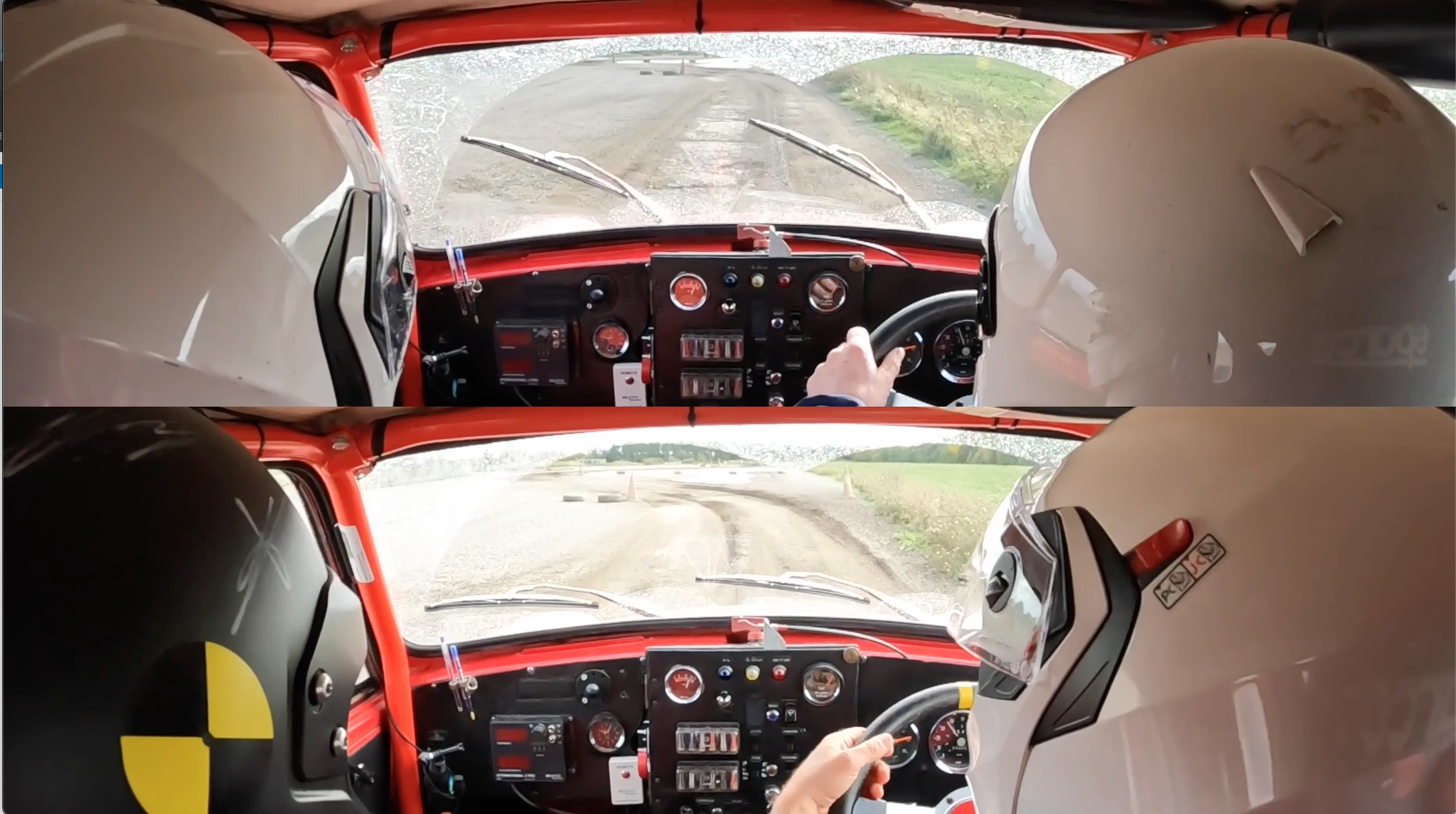
Rallying is often described as a driver’s sport, but those inside the car know a deeper truth: a rally car is only as fast as its co-driver. From the very first pace note to the final control, the co-driver is the driver’s eyes, timing system, and strategic anchor. Yet despite this critical role, co-driver training has long been one of the hardest skills in motorsport to acquire. Today, advanced rally simulation tools are changing that — transforming how co-drivers learn, practice, and build trust with their drivers.
This matters because co-driver experience is notoriously difficult to gain. Seat time is limited, opportunities are scarce, and learning mistakes in the real world can be costly, intimidating, or outright dangerous. Advanced simulation environments now offer a way to develop co-driver skills deliberately, safely, and repeatedly — something rallying has never had before. This article explores how simulation is reshaping co-driver training and why it represents one of the most important evolutions in modern rally preparation.
Why Co-Driver Experience Is So Hard to Get
Unlike circuit racing, rallying offers few low-risk entry points for aspiring co-drivers. You can’t casually “jump in” and practice. Real rally seat time is:
- Dependent on finding a willing driver
- Limited by event schedules and budgets
- Physically demanding and mentally overwhelming
- High-risk, especially for beginners
Many co-drivers start their careers on the couch — studying onboard videos, reading books, and listening to recordings — before suddenly being thrown into a real car on rough gravel or broken tarmac. The leap from theory to reality is enormous.
Strapped into a race car on a rough surface while trying to read a book is one of the most underestimated challenges for a rally co-driver. You want to just hang on and enjoy the ride but instead you have to calmly read instructions, with your head down trying not to puke last nights beer.
From the Couch to the Car: An Incomparable Jump
Watching an onboard video at home bears little resemblance to sitting in a rally car at speed. In reality, co-drivers must process information while:
- Being thrown violently across rough surfaces
- Managing g-forces under braking and acceleration
- Maintaining composure in noise, heat, and vibration
- Delivering pace notes with perfect timing and clarity
This sensory overload is one of the biggest barriers for new co-drivers. Without prior exposure, even well-written notes can fall apart under pressure. Simulation bridges this gap by introducing physical realism — motion, vibration, noise, and timing — before a co-driver ever straps into a real car.
The Art and Difficulty of Creating Pace Notes
Writing effective pace notes is one of rallying’s most nuanced skills. It requires translating a fast, chaotic drive into structured, repeatable language — while anticipating how the car will behave at speed.
Co-drivers must learn to:
- Judge corner severity and linking
- Decide what information matters — and what doesn’t
- Balance detail with clarity
- Adapt notes to a driver’s style and preferences
Doing this well takes years of experience. Advanced simulation environments allow co-drivers to repeatedly practice note creation on the same stage, refining language, timing, and structure without the pressure of a live event.
Building the Driver–Co-Driver Relationship in the Sim
Trust and rhythm between driver and co-driver don’t happen overnight. They are built through repetition, feedback, and shared experience.
Simulation enables crews to:
- Practice calling notes at different speeds
- Adjust timing and cadence
- Experiment with note styles safely
- Develop shared language and expectations
Because stages can be driven repeatedly, both driver and co-driver can pause, review, and refine their approach. This accelerates relationship building in ways real-world rallying rarely allows due to cost and time constraints.
Why Simulation Changes the Learning Curve
Advanced rally simulators turn co-driver training from an opportunistic process into a structured one. Instead of waiting for events to gain experience, co-drivers can train intentionally.
Key advantages include:
- Safe exposure to realistic conditions
- Repeatable practice scenarios
- Immediate feedback and iteration
- Reduced pressure while learning fundamentals
This results in more confident, composed co-drivers when they transition to real cars — benefiting not only themselves, but also the drivers they work with.
Value for Rally Schools, Teams, and New Talent
For rally schools and teams, simulation offers a scalable way to develop co-drivers:
- Structured training programs
- Consistent evaluation standards
- Faster pairing of compatible crews
For newcomers, it lowers the barrier to entry, providing meaningful experience before the first competitive mile.
Conclusion
Co-driver training has long been one of rallying’s most underserved disciplines. Advanced simulation tools are finally changing that, offering a realistic, repeatable, and safer way to develop the skills that win rallies.
By helping co-drivers bridge the gap between theory and reality, refine pace-note creation, and build stronger relationships with drivers, simulation is redefining what preparation looks like in modern rallying. The result is better crews, better communication, and ultimately, better performance on the stages.

